
How to Clean Mattress Stains: A Complete, No-Stress Guide
Coffee spilled in bed? A toddler accident at 3 a.m.? Those mystery yellow patches that seem to appear out of nowhere? Your mattress puts up with a lot. And unlike your sheets, you can’t just toss it in the wash. Here’s the good news: most stains lift right out with a few simple things you probably already have around the house. In this guide, I’ll show you how to clean mattress stains by type, share one reliable method that handles almost any mess, and flag the mistakes that can ruin your mattress for good. We’ll also cover how to keep your bed fresh long-term, so you scrub less and sleep more.
Why Mattress Stains Are Harder to Remove Than You Think
Mattresses are built for comfort, not for cleanup. They’re thick, absorbent, and made from layers of foam, fiber, and fabric that soak up liquid fast. Once a spill sinks below the surface, getting it back out becomes a real chore.
Time isn’t on your side, either. Brian Sansoni, senior vice president of communications at the American Cleaning Institute [LIEN], advises tackling stains as quickly as possible so they don’t have a chance to set in. A fresh spill sits right on top, where you can blot it away. A dried one grips the fibers and may take a few rounds to budge.
Then there’s moisture. Memory foam and similar materials really don’t like getting wet, so soaking them can trap dampness deep down—basically rolling out the welcome mat for mold and mildew. That’s exactly why the smartest cleaning methods use as little liquid as you can get away with.
Here’s something a lot of people miss, too: many stains aren’t from spills at all. According to the Sleep Foundation [LIEN], those big yellow marks usually come from sweat and body oils building up and oxidizing over time, much like the ring around an old shirt collar. They creep in slowly, so you might not notice how bad they’ve gotten until it’s already a problem.
What You’ll Need Before You Start
You don’t need anything fancy to handle most messes. Round up these basics first:
- A vacuum with an upholstery attachment
- Cold water (hot water sets protein stains like blood)
- Baking soda to soak up moisture and kill odors
- Hydrogen peroxide (a gentle, natural bleaching agent)
- Clear dish soap or a mild, unscented, bleach-free laundry detergent
- An enzyme cleaner like Nature’s Miracle or Angry Orange
- Clean cloths, microfiber towels, or paper towels
- An empty spray bottle
- A stiff brush or old toothbrush for working solutions in
One heads-up from the Sleep Foundation [LIEN]: skip the bleach and harsh chemicals. They can damage your mattress and irritate your skin and lungs. And always test any cleaner on a small, hidden spot first, just to be sure it won’t leave a mark of its own.
How to Clean Mattress Stains by Type
Different messes call for different fixes. Here’s how to tackle the most common ones, drawing on advice from Consumer Reports [LIEN] and the Sleep Foundation [LIEN].
How do you get blood out of a mattress?
Cold water is the move here—hot water cooks the proteins in blood and locks the stain in for good. Start by blotting with a cloth dampened in cold water. Then dab the spot with hydrogen peroxide on a fresh part of the cloth; it disinfects and lightens things up. Finish with an enzyme cleaner, give it a few minutes to break down whatever’s left, and blot dry with a clean towel.
How do you remove urine stains and the smell?
Urine is a pain mostly because of the odor it leaves behind. Blot up as much as you can first—don’t rub, or you’ll just drive it deeper. Lightly spray a cloth with enzyme cleaner and dab the spot. The enzymes go after the uric acid that causes both the yellow tint and the smell. Blot dry with a second cloth and try not to soak the area.
How do you get rid of yellow sweat stains?
For those big yellow patches from sweat and body oil, the Sleep Foundation [LIEN] suggests a two-step plan. First, sprinkle baking soda over the area, wait at least 15 minutes, then vacuum it up. Next, mix 8 ounces (≈ 240 ml) of cool water, 8 ounces (≈ 240 ml) of hydrogen peroxide, and two or three drops of clear dish soap in a spray bottle. Lightly mist the stain, add another layer of baking soda, and let it sit for a few hours or overnight. Brush the spot, vacuum, wipe with a damp cloth, and let it dry. Repeat if it needs another pass.
How do you clean food, coffee, and red wine spills?
For most food and drink spills, blot with a cloth dampened in cold water, then dab on a little liquid detergent with a fresh cloth and keep blotting. Red wine and coffee are the stubborn ones. For wine, Consumer Reports [LIEN] recommends mixing one part dish soap with two parts hydrogen peroxide, dipping in a damp cloth, and blotting until the color fades.
How do you handle vomit and other messy accidents?
Clear off any solids first. Sprinkle baking soda over the spot to soak up the mess and the smell, wait about 10 minutes, then vacuum. Dampen a cloth with enzyme cleaner and dab the area to break down whatever’s left. Blot dry and let it air out.
A General Step-by-Step Method for Most Stains
When you’re not sure what you’re up against—or you just want a routine you can trust—follow this general process the Sleep Foundation [LIEN] recommends.
- Strip the bed and wash your bedding. Pull off all the sheets, pillowcases, and blankets and launder them right away. A hot-water wash (if the care label allows) helps knock out dust mites.
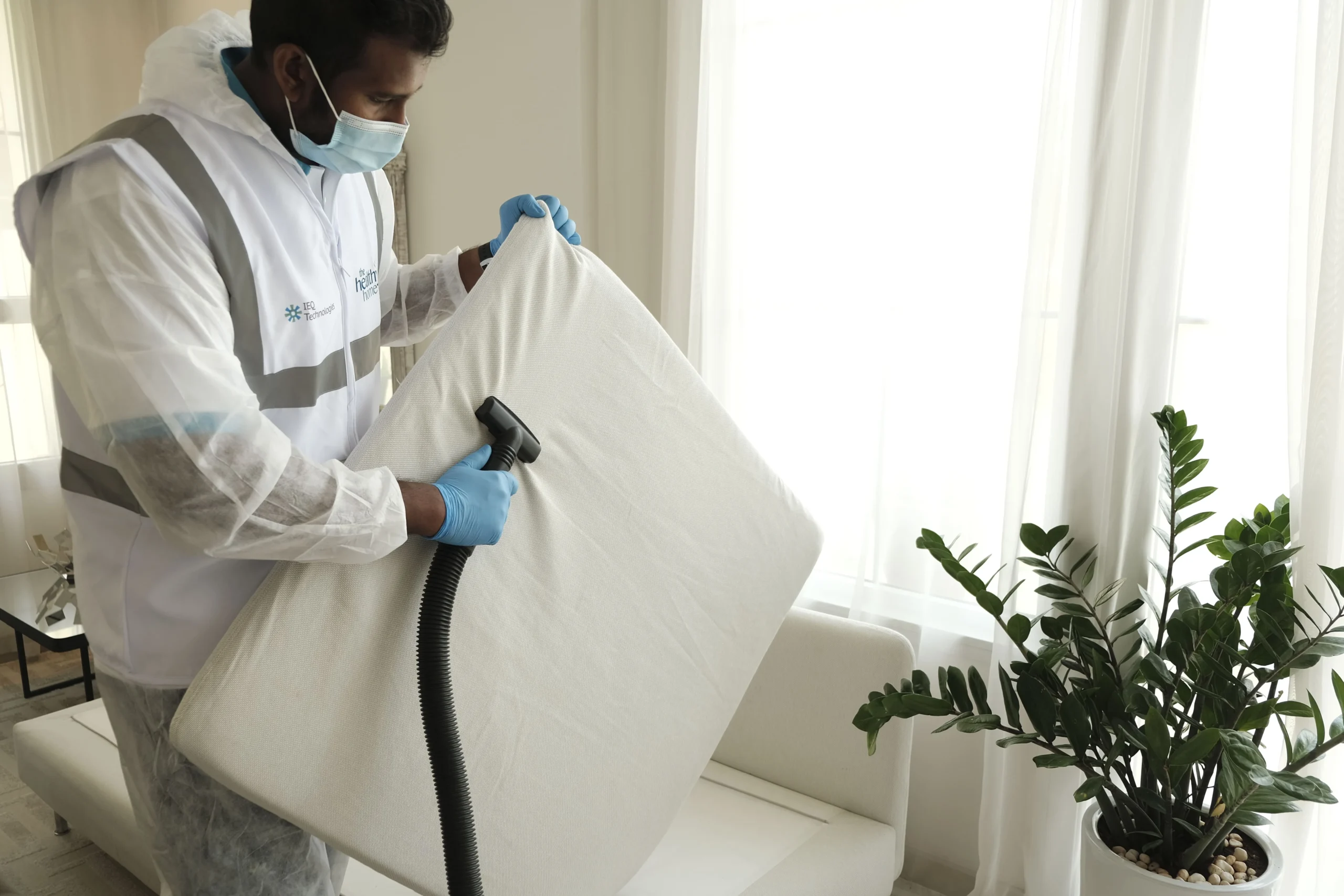
- Vacuum the whole surface. Use the upholstery attachment to lift dust, dead skin, and debris. Don’t skip the seams and sides.
- Spot-treat the stain. Put a little cleaner on a clean cloth—never pour it straight onto the mattress. Blot the stain gently, then go over it with a separate cloth dipped in cold water. Repeat until it lifts. Remember the golden rule: use as little liquid as possible.
- Sprinkle on baking soda. Once the spot dries, dust a thin layer of baking soda over it to pull out moisture and odor. Let it sit for a few hours—overnight is even better. Crack a window for some airflow.
- Vacuum again. Clear away all that baking soda with the upholstery attachment.
- Let it dry completely. No shortcuts here. Even when the top feels dry, the layers underneath can still be damp. Put the sheets back too soon and you’ll trap moisture and invite mildew.
Since this takes a while, the Sleep Foundation [LIEN] suggests starting first thing in the morning, so the baking soda has all day to do its thing before bed.
What to Avoid When Treating Mattress Stains
A few simple mistakes can turn a small spot into a permanent one. Watch out for these:
- Don’t use hot water on blood or other protein stains. Heat sets them. Cold water first, always.
- Don’t rub the stain. Rubbing pushes the mess deeper and spreads it around. Blotting lifts it out.
- Don’t over-soak the mattress. Foam really hates moisture. Too much liquid means mold and lingering smells.
- Don’t use bleach or harsh cleaners. They can break down materials, void warranties, and put your health at risk.
- Don’t pour solution straight onto the surface. Put it on a cloth instead, so you stay in control of how much soaks in.
- Don’t skip the patch test. Hydrogen peroxide works great, but it can lighten some fabrics—try a hidden spot first.
- Don’t pull off a cover unless the maker says it’s okay. Some zippered covers look removable but aren’t, and yanking one off can void your warranty or damage the mattress.
Keeping Your Mattress Clean Long-Term
The easiest stain to clean is the one that never happens. A little prevention goes a long way toward keeping your bed fresh.
A waterproof mattress protector is your best line of defense, hands down. Sansoni describes it as your security guard against stains, since it adds a liquid-proof layer you can just toss in the wash. The Sleep Foundation [LIEN] suggests one for just about everybody.
After that, a few easy habits do the heavy lifting:
- Wash your sheets weekly. Regular laundering keeps sweat, oils, and allergens from working their way into the mattress.
- Deep clean every six months. A full vacuum-and-baking-soda treatment twice a year keeps things hygienic and helps your mattress last longer.
- Freshen with baking soda between cleanings. Sprinkle it on, wait 15 minutes, and vacuum to lift odors.
- Keep food and drinks out of bed when you can—it’s the surest way to dodge accidental spills.
- Air out the room. Open the windows and run a fan now and then to cut the humidity that feeds yellowing and mold.
Frequently Asked Questions
How often should you clean your mattress?
The Sleep Foundation [LIEN] recommends a deep clean about every six months. If you spill something, treat it right away before it sets. A mattress protector cuts down on how often you’ll need a full cleaning.
Can you use the same method on a memory foam mattress?
Yes, just go easy. Memory foam isn’t meant to get wet, so use the least amount of cleaner you can and give it plenty of time to dry. Whatever you do, don’t soak the foam.
Are store-bought enzyme cleaners worth it?
For biological messes like blood, urine, sweat, and vomit, enzyme cleaners are usually your best bet. They break down the organic matter behind both the stains and the smells—something plain soap and water just can’t do.
Will hydrogen peroxide damage my mattress?
It can lighten certain fabrics, which is why that patch test on a hidden spot really matters. Used carefully and at the right dilution, hydrogen peroxide is one of the best tools out there for lifting yellow and blood stains without harsh chemicals.
How long does a mattress take to dry after cleaning?
It depends on the size of the spill and how much liquid you used, but plan on a few hours at least. Wait until it’s fully dry—top and inner layers—before you make the bed, even if the surface feels ready.
Fresh Sheets, Fresh Start
Cleaning a mattress really isn’t hard once you know the rules: blot instead of rub, match the treatment to the mess, go light on the liquid, and let everything dry. With a handful of household supplies and a little patience, even old yellow patches and surprise spills can come out.
The smartest move, though, is prevention. Grab a waterproof protector, wash your sheets every week, and run a baking soda refresh every few months. Do that, and you’ll spend a lot less time battling stains—and a lot more time enjoying a clean, comfy place to sleep.