
How to Remove Hard Water Stains from Glass (For Good)
TL;DR: Hard water stains on glass are caused by calcium and magnesium deposits left behind when water evaporates. You can remove them using white vinegar, baking soda, lemon juice, or commercial cleaners like CLR. To prevent future buildup, squeegee glass after each use and consider applying a water-repelling sealant.
Those white, cloudy patches on your shower door aren’t just unsightly — they seem to multiply no matter how often you clean. If you’ve ever scrubbed yourself half to death with regular soap and a sponge, only to find the spots still there, you already know the frustration. The good news? Knowing how to remove hard water stains from glass doesn’t require a chemistry degree or a cabinet full of expensive products. Most of what you need is probably already sitting in your kitchen.
This guide walks you through everything: what’s actually causing those stubborn spots, which home remedies hold up, what store-bought options are worth the money, and — most importantly — how to stop them from coming back.
What Causes Hard Water Stains on Glass?
Hard water is water with a high mineral content, typically formed as it filters through deposits of limestone and chalk. By the time it reaches your faucet, it’s carrying dissolved minerals — mainly calcium and magnesium — along with smaller amounts of sulfates and bicarbonates.
When that mineral-rich water lands on a glass surface and evaporates, the minerals don’t go with it. They stay behind, bonding to the glass and forming the chalky white spots or hazy film you’ve probably come to dread. The longer those deposits sit, the harder they grip. A thin mist of water droplets left on a shower door for a week looks very different from the same door left uncleaned for a year.
This is why standard glass cleaners often don’t cut it. Most are designed to clean dirt and grease — not dissolve mineral buildup. To tackle calcium deposits effectively, you need something acidic enough to break the bond between the minerals and the glass.
What You’ll Need Before You Start
Gathering your supplies before you start saves a lot of back-and-forth. Fortunately, most of these items are easy to find and inexpensive.
For DIY methods:
- White distilled vinegar
- Baking soda
- Fresh lemons or bottled lemon juice
- Hydrogen peroxide
- A spray bottle
- A soft sponge or non-scratch scrub pad
- Microfiber cloths
- A squeegee (for rinsing and drying)
Optional but helpful:
- Rubber gloves
- Borax powder
- An old toothbrush (great for edges and corners)
If the stains are particularly stubborn, you may want to keep a store-bought product on hand. More on that in a later section.
Step-by-Step: How to Remove Hard Water Stains from Glass
The method you choose depends on how bad the buildup is. Start mild and work your way up — there’s no need to reach for the heavy-duty stuff if the stain is fresh.
For light to moderate water spots
- Fill a spray bottle with undiluted white vinegar. Don’t dilute it — you want the full acidity working on those deposits.
- Spray the affected glass thoroughly and let it sit for 5 to 10 minutes. This gives the acid time to break down the calcium and magnesium.
- Scrub gently with a soft sponge using circular motions. Avoid anything too abrasive that could scratch the glass.
- Rinse with warm water and immediately dry with a microfiber cloth. Letting the glass air-dry can leave new water spots behind.
For shower doors and windows, repeat this weekly and the buildup rarely gets bad enough to need stronger treatment.
For heavier buildup
- Start with the vinegar spray as described above.
- While the glass is still wet, sprinkle baking soda directly onto the sponge and scrub again. The baking soda adds mild abrasive action, and when it contacts the vinegar, it fizzes — which helps loosen stubborn deposits.
- Let the paste sit for a few minutes on especially tough spots before scrubbing.
- Rinse thoroughly and dry with a microfiber cloth.
This combination is one of the most effective DIY approaches for how to remove hard water stains from glass without scratching the surface or using harsh chemicals.
For faucets and fixtures (bonus tip)
Soak a cloth or a few folded paper towels in white vinegar and wrap them tightly around the stained fixture. Leave it in place for 15 to 30 minutes, then remove and scrub gently with a soft toothbrush. Rinse well and dry.
Be cautious with specialty finishes like brushed nickel or bronze — undiluted vinegar can damage certain coatings. A diluted solution (1:1 vinegar to water) or even just mild dish soap is safer for those surfaces.
Natural Home Remedies That Actually Work
DIY solutions get a bad reputation sometimes — dismissed as folk wisdom that doesn’t deliver. But when it comes to mineral deposits, several natural options are genuinely effective.
White Vinegar
The most reliable and widely used option. Vinegar’s acetic acid dissolves the calcium and magnesium compounds that form water spots. It’s safe for most glass surfaces, inexpensive, and easy to use straight from the bottle.
Lemon Juice
Lemons contain citric acid, which works similarly to vinegar on mineral buildup. It’s slightly less potent, but great if you want a fresh scent rather than the sharp smell of vinegar. Cut a lemon in half and use it directly as a scrubbing tool, or squeeze the juice into a spray bottle. Let it sit for a few minutes before rinsing.
Baking Soda
On its own, baking soda is a mild abrasive. It won’t chemically dissolve mineral deposits the way acid-based solutions do, but it’s excellent for scrubbing away loosened buildup without scratching glass. It also pairs well with vinegar or lemon juice to boost cleaning power.
Hydrogen Peroxide
Hydrogen peroxide acts as a gentle bleaching agent and can help dissolve discoloration from water spots — particularly on lighter-colored surfaces. When combined with baking soda into a paste, it works well on stubborn, set-in stains. Apply the paste, let it sit for 5 to 10 minutes, scrub, and rinse.
Borax + Vinegar Paste
For tougher spots that still won’t budge, mix borax powder with enough vinegar to form a paste. Apply it to the stained area, let it sit, then scrub with a non-scratch pad. Borax is mildly abrasive and alkaline, which helps break down mineral residue in a different way than vinegar alone.
One thing to keep in mind: these natural methods work best on glass that hasn’t been left for months or years. The older and thicker the buildup, the less likely household remedies alone will fully resolve it.
Store-Bought Products Worth Trying
Sometimes the DIY route just doesn’t cut it — especially with older, deeply set mineral deposits. Here are some commercial products worth considering.
CLR Calcium, Lime & Rust Remover
One of the most well-known options for tackling tough mineral buildup. CLR is formulated specifically to dissolve calcium, lime, and rust, and it’s widely available at grocery and hardware stores. Follow the label instructions carefully and rinse thoroughly afterward.
Bar Keepers Friend
A classic multi-surface cleaner that works well on glass, tile, and porcelain. Its oxalic acid content makes it effective on mineral stains, and the powdered version can be mixed into a paste for targeted scrubbing.
Rain-X Shower Door X-treme Clean
Specially formulated for glass shower doors, this product removes soap scum, hard water buildup, calcium, and lime. It’s a solid option if you’re dealing with cloudy glass that has a combination of soap residue and mineral deposits.
Diamond Magic
A paste-based stain remover designed for mild to moderate glass stains. It’s safer than acid-based options and easy to apply with a sponge or cloth — just buff it in, rinse, and repeat if needed.
Winsol Crystal Clear 550
A professional-grade product typically used by window cleaners. It handles heavy-duty buildup including mineral deposits, exhaust particles, and chemical residue. Use it with caution, follow instructions carefully, and consider wearing gloves — it’s more aggressive than the consumer-grade options above.
For any commercial product, always test a small, inconspicuous area first. Some formulas can interact with specialty glass coatings or damage certain finishes if applied incorrectly.
After testing most of these methods on a shower door that hadn’t been properly cleaned in over a year, the vinegar-and-baking-soda combo made a real difference — but only after leaving the vinegar on for a full 20 minutes, not the usual five. CLR worked faster on the worst patches, though it left a faint chemical smell that lingered even after rinsing twice. One thing worth knowing: a generic scrub pad from the dollar store scratched the glass slightly, which is how it became clear that “non-scratch” isn’t just marketing language — it actually matters. If the glass already looks etched after cleaning, that’s not residue; that’s surface damage, and no cleaner will fix it.
Tips to Prevent Water Spots from Coming Back
Cleaning is only half the battle. These habits help keep cloudy glass from returning.
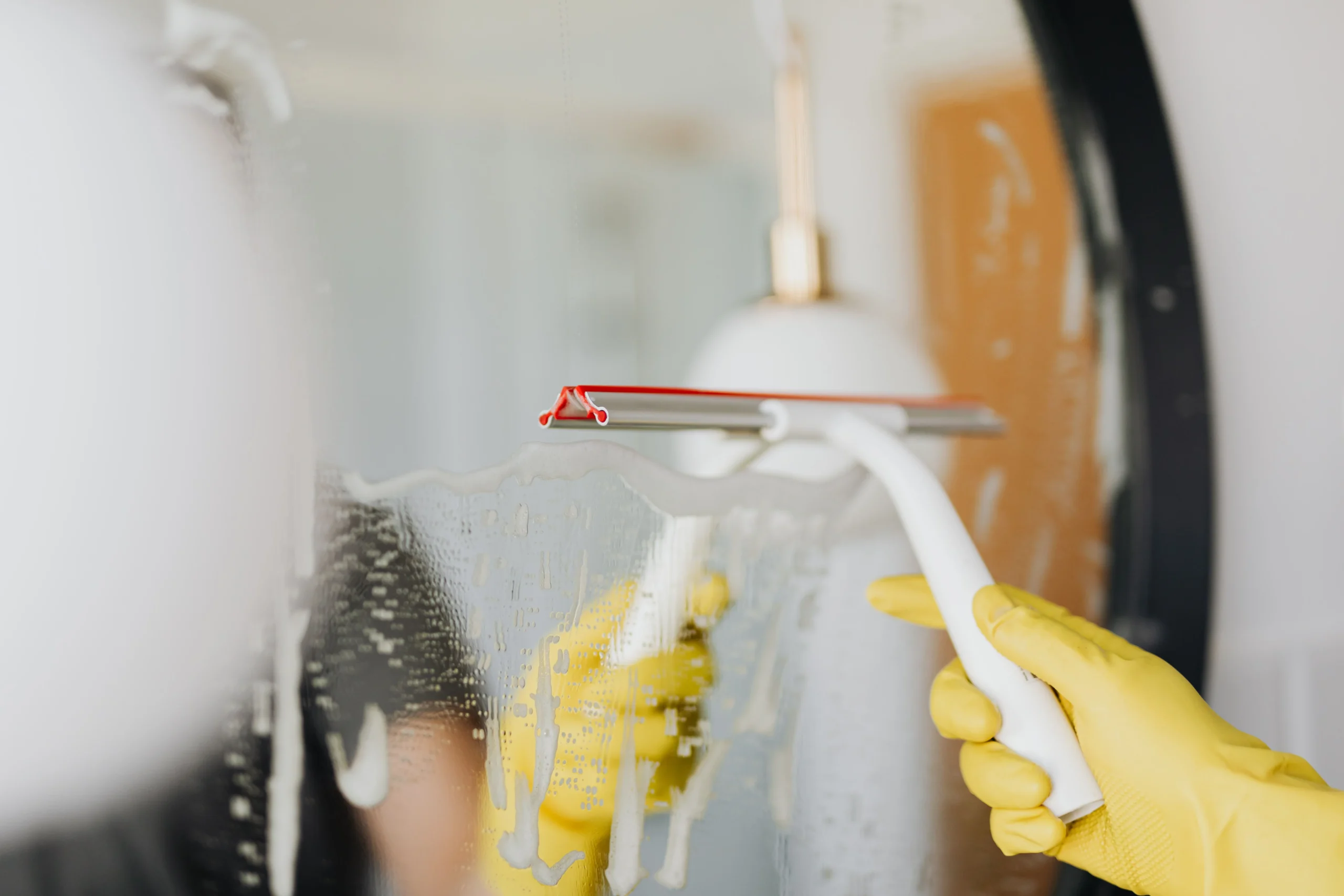
Squeegee after every shower. This single step does more than almost anything else. Removing standing water from glass before it evaporates means there’s nothing left behind to form deposits. Keep a squeegee hanging in the shower and build the habit.
Dry glass surfaces after use. A quick wipe with a microfiber cloth after washing your hands or doing dishes keeps mineral buildup from accumulating on sinks and glassware.
Spray a light vinegar solution weekly. A 1:1 mix of white vinegar and water in a spray bottle, applied and wiped off once a week, can stop deposits from getting a foothold in the first place. It takes about 60 seconds.
Apply a glass sealant or water repellent. Products like Rain-X, EnduroShield, or Mr. Hard Water Protectant Sealant create a hydrophobic barrier on glass. Water beads up and rolls off instead of sitting on the surface and evaporating. These need to be reapplied every few months, but they’re a solid preventive measure — especially for shower doors and windows exposed to hard water regularly.
Consider a water softener. If you live in an area with very hard water, a whole-house water softener is the most comprehensive long-term solution. By removing calcium and magnesium from the water supply before it reaches your fixtures, a softener prevents mineral deposits from forming anywhere in the home — on glass, tile, plumbing, and appliances. It’s a bigger upfront investment, but one that reduces maintenance significantly over time.
Frequently Asked Questions
Does vinegar actually remove hard water stains from glass, or is that a myth?
It works — but with some caveats. White vinegar is acidic enough to dissolve fresh to moderate calcium and magnesium deposits, making it one of the most effective natural solutions for water spots on glass. For older, heavily mineralized stains that have had months to harden, vinegar alone may not be enough. In those cases, combining vinegar with baking soda or stepping up to a commercial cleaner like CLR gives better results.
How long should I leave vinegar on glass before scrubbing?
For light water spots, 5 to 10 minutes is sufficient. For heavier buildup, let the vinegar sit for up to 20 to 30 minutes before scrubbing. You can also reapply it if the glass starts to dry out before you’re ready to scrub. The longer the contact time, the more effectively the acid breaks down the mineral deposits.
Can hard water permanently damage glass?
Yes — over time, severe mineral buildup can etch into the glass surface, especially if it’s exposed to heat or sunlight for long periods. Once etching occurs, the glass takes on a permanently hazy or pitted appearance that can’t be reversed with standard cleaning. This is why consistent maintenance matters: the longer you let deposits sit, the higher the risk of lasting damage.
Are store-bought cleaners better than DIY methods?
It depends on how severe the staining is. For mild to moderate buildup, natural remedies like vinegar and baking soda often work just as well as commercial products — and they’re gentler on glass coatings. For older, stubborn deposits that haven’t responded to DIY treatment, a purpose-made cleaner like CLR or Bar Keepers Friend is usually worth the step up.
How often should I clean glass to prevent hard water stains?
In areas with moderately hard water, a weekly wipe-down with a vinegar solution and daily squeegeeing after showering is usually enough to prevent noticeable buildup. In areas with very hard water, you may need to clean more frequently or apply a glass sealant to reduce the rate at which minerals accumulate.
A Cleaner Glass Surface Starts Today
Hard water stains are stubborn, but they’re not invincible. Whether you start with a spray bottle of white vinegar and some baking soda or reach for a trusted commercial cleaner, the key is acting before the buildup gets out of hand. The longer mineral deposits sit on glass, the more work they create.
Pick one method from this guide, try it this week, and pair it with a simple daily habit — like keeping a squeegee in the shower. Small, consistent actions make a bigger difference than occasional deep-cleaning sessions. Your glass will thank you for it.